Showing posts with label artsy-fartsy. Show all posts

Saturday, May 7, 2011

Urusei Yatsura, No. 4 - Urusei Yatsura 4: Lum the Forever (1986)


I’ve been completely unprepared for Urusei Yatsura. I’d expected this franchise to work like many a film series from a TV show from a manga: with one-off, easy adventures with a consistent tone. Part One, Only You, seemed to confirm so much, which is why Beautiful Dreamer is so flabbergasting, a pretentious visual poem that just happens to be in the Urusei universe. Then Remember My Love has the appearance of a return to relative sanity, only for new director Kazuo Yamazaki (or maybe I should say Yamazaki Kazuo) to churn out Part Four, Lum the Forever, and answer the alluring siren call of incomprehensibility.

Really, there seems to be no greater logic dictating how one theatrical Urusei Yatsura release follows another. It’s almost as though Kitty Films, the animation studio tasked with adapting Rumiko Takahashi’s manga to television, saw these films as an outlet for freer artistic expression. I gather, from what little I know of the workings of the Japanese animation industry, that this is likely. As assumed in regards to Crayon Shin-chan, anime media franchises come about from manga, then spread into all other arenas: TV, film, video games, videos, merchandise, food. An animation studio is then defined by a franchise to a greater extent than even, say, Disney has been by the Mouse. (On the other hand...I may be completely wrong about this.) So you’ve suddenly got a coterie of creative individuals, and the only stories they’re allowed to tell are the further misadventures of Ataru and Lum, two preset characters strictly limited by Takahashi’s love-centric alien premise.


The TV show is beholden to the strictures of the manga, but the movies are where these guys can run rampant. So we get a massive tonal dissonance between entries, even when the same writer/director is involved, because of a push-and-pull between Takahashi, Yamazaki, formerly Mamoru Oshii, and other strong-willed creative types. This barely resembles a consistent franchise as we know it (I’m speaking solely of the movies), and that’s even with Japan’s culture of extreme pop fanaticism. Japanese fan devotion prospers to an ungodly level, so following Urusei Yatsura becomes Serious Business. Thus fans expect the same comforting story they’ve pre-devoted themselves too, even while creators struggle to escape those confines. And the franchise oscillates organically in a most atypical manner.


So there’s Lum the Forever, which came with a warning as perhaps the most challenging and off-putting of the entire franchise – and that’s with Beautiful Dreamer having already embraced total pseudo-philosophical surrealism as its raison d’etre. Hell, even the Netflix sleeve advises one must ignore Forever’s plotline to get any real enjoyment out of it.

Given these misgivings, Lum the Forever doesn’t seem particularly divisive at the outset (oh how naïve I was!). At the very least – and this goes for the film’s entirely, thanks be to Buddha – the characters are fully realized, and their personalities dictate the film’s texture. This alone is evidence we’re not watching one of Oshii’s efforts. And the scenario is simple enough…at first.

Nonetheless, again we seem to have abandoned the sci-fi-comedy-romance olla podrida of Takahashi’s original. Now, rather, the premise (once an involved tale of extraterrestrial soap operatics and romantic entanglements) can be reduced as follows: A group of high schoolers endures hijinks. That’s simple enough; it lets auteur Yamazuki go in whatever direction he wishes. In Lum the Forever, that direction is to have his cast make a movie, a fantastical bit of exploitation which seems equal parts Japanese mythology and The Evil Dead. I’d actually dearly love to see such a thing. As it is, the evident reality of Lum the Forever frequently gives way to extended scenes from this in-movie movie, played out in whole. Oh, and there’s parallels in there, as a feudal village’s Oni Princess spirit is a stand-in for Lum herself, all perfect beauty and superpowers. For grounding, basically assume that Ataru = Ash.


Here I find myself thinking, “Hey, this isn’t that complex!” I mean, it’s a meta movie! Those things can be obtuse, sure, but when you get a sense for one, the others all fall out regularly enough. And so, in the group’s unnamed horror movie a cherry tree is cut down. For want of a proper effects budget, the animated filmmakers depict this by themselves cutting down a cherry tree – the ancient Tarōzakura, guardian spirit of Tomobiki (their town). And so when strange events start occurring in the real world, paralleling the movie, well, we can always fall back upon the old “life imitates art, and vice versa” answer for all our strangeness.

Okay, I thought, maybe the present strangeness is only questioned because it’s not a specifically Japanese form of insanity – though have no doubt, as an anime fantasy, there’s still the baseline pile of space alien babes (now totally divorced from their leopard bikinis, curse it all!), anthropomorphic demon monsters, et cetera, all stuff we’re just supposed to assume. (I’ve no idea how someone with no grounding in this milieu might handle Lum the Forever.) On top of that oddity is a peculiar style of anti-logic more familiar from Italian horror than Japanese fantasy. Though Forever remains forever just eerie, creepy, never outright horrific, it feels tonally more of a piece with Suspiria or The Beyond or Demons, to randomly name three of Italy’s more coherent examples of not giving a shit.


Something like 80% of Lum the Forever glides along, casually odd, making reasonable sense as an experiential bit of low surrealism. There’s no attempt to actually feel like a Urusei Yatsura movie, apart from characters acting like themselves, but with only one of four films so far feeling like its own franchise, perhaps this is more regular than I give it credit. Tomobiki falls into a deathless winter, malevolent but impartial spirits hover the film’s edges, and Lum loses her electrical powers. This upturns the usual dynamic, as she can now no longer torment Ataru whenever he, her lover, attempts to seduce others. Also, Lum cannot hover as fast as she once could, and her horns vanish – all these details are the assumed normalcies of the franchise, which is why it’s hard to pinpoint new strangeness vs. old.

So far so good. I’ve got a pretty decent handle on Lum the Forever (apart from that totally out-of-place demonstrative pronoun).


Then the Third Act rears its incomprehensible head. Scenes follow scenes with progressively less obviousness. From what they present, it seems dreams are to blame. The dead cherry tree has reformed into a lake crater, why not, and is imparting the residents of Tomobiki with waking, literal manifestations of their collective subconscious – and it’s never clear just whom is getting brain-raped at any given time.

Okay, so what’s the big deal? Beautiful Dreamer invoked dreams as its explain-away to justify an entire movie’s worth of structureless existentialist babble. How is it Lum the Forever doesn’t become confusing until dreams enter the picture? Well, part of it is a steady accumulation of strangeness: Like a heavy locomotive slowly building up momentum, Forever remains normal for so long, then dives headfirst into craziness with such increasing abandon, it’s that much more disconcerting. We’re back in Chien Andalou territory here, sans the surer hand of an Oshii to fashion visual motifs to string us along. The final ten minutes honestly feel as though each and every animator, writer, storyboarder and voice artist was separately trying to out-create the other. There are individual shots filled to the brim with Lovecraftian tentacle gods, giant sentient raccoons, apocalyptic nuclear terror, ancient uteruses and sheer hallucination. Then come the next shot, and none of that is remotely pertinent any more.


There’s also the question of what it all means. Beautiful Dreamer, for its motions towards profundity, boils down to little more than a college freshman’s poetry. “We’re, like, totally weak beings in an unknowable false universe, man,” it says. “What is reality?” all that shit. The telling is complex and convoluted, but the end result is the very definition of shallow soulfulness.

Then there’s Lum the Forever. While Beautiful Dreamer’s end is what cements it as somehow knowable, this one just keeps on out-weirding itself. It becomes like a Cremaster movie, or some other such distant work of a solo artist working in his own idiom, without a roadmap for our edification. In those Cremaster movies, the viewer is expected prior to viewing to have an encyclopedic understanding of Masonic imagery, the history of Mormonism, the biology of bees, the science of glaciers, a specific 1970s murder, and dozens of other arcane cryptic effluvia. The finale of Lum the Forever seems constructed around a similar mystery, another Lynchian mind puzzle which boils down to little in the end. It all feels like the idealized confusion one connects with Mulholland Dr., and it’s equally impenetrable.

For all that, certain critics and prognosticators, intent upon discovering the meaning embedded within (because there’s just gotta be some brilliant post-human conclusion to all this, for why else couch a family anime epic in arcana), have their conclusions. Yamazaki just means to critique Lum’s cult of perfection, and through it criticize anime fans in general.

Excuse me for saying this, but Only You did that too, and 1,000,000x more clearly!


It helps that Part One is arguably some clear cut satire. It seems the whole of “Urusei Yatsura,” dating back to its manga form, is a spoof of prevalent anime attitudes. Lum is a flawless, angelic creation, perfectionism made flesh, not because Takahashi espouses it, but because she’s trying to mock that type. This is the reason for Ataru’s extreme frailty, he is Lum’s object of desire and her foil all at once. In the first movie, whole planets enter into genocidal war for Lum’s benefit – “I am prepared to die for Lum!” – and it’s a joke. A funny one!

The only problem is, fans seemed to take it seriously. Surely “Urusei Yatsura,” the greater franchise, wouldn’t have lasted for over a decade (half that for the TV show alone) if people didn’t take it seriously to some extent. So perhaps Yamazaki, conscious of Only You’s failure to end a mentality, seeks to do it better.

Too bad it’d take a James Joyce scholar to parse that out from Lum the Forever. Though I’ll make a brief effort. Towards the end, there are certain dreams which are easy to identify as a specific minor character’s or another’s. Each relates back to Lum in some way. At any rate, each dream is ultimately about Love, about a perversion of Love, and about some wholly non-hagiographic conception of Lum. That is, under dreams, Lum’s former male admirers grow bored with her…except when they don’t.


These regularized elements start to point, ever so imperceptibly, towards a critique of Lum’s flawlessness, and further to the cult-like devotion of Urusei’s zanier fans. Under this mentality, it’s not surprising that the film’s final moments involve all-out warfare being waged for Lum’s sake. Again, nothing too distinct from Only You. The only difference is, there it was clear! There was a perfectly sensible plot reason for the fighting; here, people just start firing off bazookas and warheads entirely without preplanning or a target or anything. It’s an exaggeration, sure, I guess, but that’s a problem? Only You was already an exaggeration, one many people evidently didn’t get. What’s the point in parodying it with even greater extremes? Poe’s Law dictates that people still aren’t going to be able to figure this out, those people specifically being Urusei Yatsura superfans.

Whatever is going on here, Lum the Forever winds up a fairly frustrating movie. It again represents the film creators’ complete disinterest in furthering the fundamental franchise concept – I now fully expect something unexpected from the coming entries. At least this one, unlike Beautiful Dreamer, is made with a functional understanding of the characters. Still, I suppose I’d’ve been better off simply following Netflix’s advice (aka the “MST3K” mantra), and just letting the strangeness wash over me without critique.

Urusei Yatsura, No. 2 - Urusei Yatsura 2: Beautiful Dreamer (1984)


Mamoru Oshii directed Only You, the first film in the Urusei Yatsura franchise. It was not a pleasant experience for him. Despite being a Part One, Only You left Oshii little room for personal creativity, the title already belonging to a wider, fan-driven franchise, with a TV show and manga. It was really Rumiko Takahashi’s show, with Oshii a mere technician to deliver fluid animation of someone else’s heart, soul, tone and creation.

Though he first found professional success as a “Urusei” storyboarder – hence the swift promotion to director – Oshii was not content with the mere joyous, comic product mangaka and fans expected. Nope, Oshii was an Artist, with deep, profound messages to impart upon the world – that is to say, he’s an amateur philosopher with decent access to drugs and Europe’s art house triumphs, your Godards and Fellinis and Melvilles and Bergmen. And so, furthering his own myopia, franchise be damned, Oshii hijacked the Urusei Yatsura brand name, central characters and all, to write and direct Part Two, Beautiful Dreamer.

As an example of how atypical Beautiful Dreamer is, “Urusei” creator Takahashi was barely willing to let Oshii’s screenplay go into production. But obviously it was produced anyway, precisely as Oshii envisioned it – at which point the director was loosed from the series, to develop his own high-falutin’ auteur name with, among other works, Ghost in the Shell and something called Patlabor 2. So we’re dealing with someone who possesses evidently no significant sense of humor, having self-assigned him the task of continuing a satirical anime series in his own particular idiom.


Beautiful Dreamer is therefore a gigantic anomaly in the series, so much so that its U.S. distribution is by a completely different company. Appropriately, then, that U.S. anime fans, without perhaps as much of a vested interest in the overall “Urusei” universe, have responded far better to Beautiful Dreamer than Japanese audiences, who look at it as a part of the larger Urusei Yatsura franchise…and find it wanting. To be dead certain, as a piece of a series, Beautiful Dreamer is a shambles, a sorry excuse for a sequel. The only thing keeping it from being a “sequel in name only” like Halloween III: Season of the Witch is the presence of every single franchise character. Visually, at least, for there’s very little of their personalities as I understand – frankly, there’s hardly any personality at all, as Oshii is notoriously unconcerned with characters or plot as a rule.

Going in, given the overall series premise, you cannot fault me for expecting something vaguely sci-fi-ish, and also comical and romantic. Hell, even dropping some of that, surely the mere sci-fi conceit –invading aliens (this summation completely misrepresents the series, by the way) – ought to provide Oshii with the grist he needs for atmospheric, unfriendly visual poetry.

No, that whole assumption was ill-founded, though damned if I know what Beautiful Dreamer is actually about...No, wait, I do. It’s about dreams, which is kinda obvious now, though it takes the movie a good long while to get there – in fact, it’s nearly two hours of surrealistic expressionism, justified at the end with the ever-tiresome “all just a dream” copout. The process of actually reaching that moment, though, is Kafkaesque, and resolutely refuses to make sense on any level if you don’t already share its attitudes. Beautiful Dreamer comes of a melancholic personality – in other words, it’s clearly not Takahashi’s work – someone who feels Truth can only be gotten to through angst and ennui and lotsa equivocation about reality and humanity and time and, well, things get pretty well unraveled thematically, narratively, you name it, by the time this thing is through.

Though circumstances start out reasonably normal, in that Urusei Yatsura sense of the word, with the familiar characters – Ataru, Lum, Shutaro, Shinobu, Megane, and many, many others I’ve been unable to identify/distinguish – all working together on a project. It’s the day before the big school festival, and they’re creating a coffee shop. Specifically the Third Reich Decadent Coffee Shop – this is the section which makes sense. In a rare, isolated example of an attempt to do something pertinent to a Urusei Yatsura character, it is suggested Ataru’s own “weird tastes” have dictated this Nazi theme – because, sure, the world’s mightiest pervert would also be Hitler-crazed, right? (Ilsa says so.) Cue a slapstick electricity routine involving a WWII tank they’ve shoved in the middle of the school building – again, this is the sane section – slapstick wholly opposed to the Oshii self-pitying approach, but something a Urusei Yatsura cannot be completely expunged of.


Already warning bells are sounding, and not just the random excess of fascist imagery. Scenes are filmed (if that’s the right word in animation) to be just a little surreal, a little experiential. The setting rarely moves away from the high school – the “normal” location in a franchise that has the whole universe as its playground – but even so, Oshii is intent to show our own urban world as a minimalist, alienating wasteland. It’s kind of like the city-bound scenes in The Matrix, and it’s no mistake that the Wachowskis were basically trying to make a live action Oshii movie there – which ignores the fact that Oshii has made live action movies, such as The Red Spectacles, which was apparently his chance to redo the themes first broached here, but beyond the stifling control of the dread Takahashi, still dominating over Oshii’s precious, precious temperament.

I think I got distracted. So things are already sort of noirish, forever pessimistic and dour as if that were the automatic way we see the world – this is what I mean by having to share Oshii’s existentialism to really go along with this movie. I miss the gigantic mallets and space bikinis of Only You.


Then the next day comes, only it’s not the next day, but really the same day, the festival still one day away. That’s right, the strangeness becomes official with a Groundhog Day scenario, the entire “Urusei” roster sequestered together into a closed time loop. They become aware quickly enough, but not with the surface level ease of that Bill Murray classic. Rather, characters – minor characters, at that – gather in a non-Hitler coffee shop like in an Edward Hopper painting, and have debates about déjà vu and whatnot. It’s all so pseudo intellectual, like a college freshman who’s just caught wind of ontological doubt, and it takes it seriously. Add to that visuals which resolutely do not follow together in any evident manner, like tent-dwelling sewer monks and never-ending rain puddles…

There’s so little connect from one moment to another, despite all the subtitled mutual mental masturbation, making any attempt at a standard recap pretty hopeless. More and more Beautiful Dreamer is evidently an Art Film first and foremost, employing just enough Urusei Yatsura imagery to avoid actually being a Criterion competitor. With all the chiming bells and casually unrelated visuals, it’s like a Buñuel film, like Un Chien Andalou, and for you to really get a sense of the strangeness I’m referring to, here is a goodly chunk of that indecipherable movie (which, I must warn, shares Salvador Dalí as a director).


It seems whatever heady idea a character proposes, it comes to reveal itself as true, as their world dismantles slowly into a morass of surrealism. As the days repeat, we move beyond the Sisyphean ordeal of Groundhog Day, through a disconnected panoply of other semi-sci-fi seminal set pieces. The world crumbles into disrepair, and soon everyone not trapped within the time loop is simply gone. It’s a Road Warrior world, our characters sleeping by night in Ataru’s house, and spending their days in the latest alien setting while they further debate the ontological merits of the space-time continuum, or whatever. “Civilization has come to an end.” Thank you, random voice which never appears at any other stage. It’s like every ten minutes we enter a new movie!

And then they’re living in Dark City! Boy, Beautiful Dreamer is best summed up by citing assorted other flicks which quite likely took some inspiration from here. There is no surfeit of imagination in Beautiful Dreamer, but it leaves one feeling so at a loss to actively engage the material. Now it’s just a waiting game to see if anything sensible comes of this stream-of-consciousness lunacy, and if things can reset themselves so that Part Three can make some sense, franchise-wise.


For now the world is a two-kilometer Flat Earth, upon the back of a gigantic flying space turtle, the missing characters granite pillars beneath the turtle further holding the world up. We’re a long way from Groundhog Day here. We’re an ever further way away from Only You, or anything functionally relating to Takahashi’s creation. Honestly, I cannot see just what in Beautiful Dreamer necessitated the use of these specific characters, except that Oshii needed someone to plug into his nightmarish hellscape, and might as well use those pre-existing creations closest at hand. This is somewhat artistically insincere, to be honest, as it doesn’t actually compliment or construct anything from the franchise; it just cannibalizes that franchise in whole, like using Avatar as the basic for hardcore pornography, or something.


With each new mini-premise entirely rewriting the rules, one can see why dreams will have to become the answer. Even then, it’s not that simple. Just who’s dream is this? Not that it matters, perhaps, as personality doesn’t account for anything. There’s the suggestion that characters are juggling dreams, shifting from one’s psychosis to another’s – yup, the germ, or inception if you will, for Inception is in here as well, but just as encased in pretentious muck as anything else.

Then again, we’re just as well in Nightmare on Elm Street territory, not in terms of anything as straightforward as a specific genre, but in the sudden artless introduction of Mujaki, an immaterial dream entity.


The introduction of a new explanation is actually a chance for new wrinkles – it’s all meant to get the audience questioning its own reality, but again, I’m not predisposed to do that (but having once been a teenager, I did once ponder such preposterous ponderances). Nicely enough, no matter how nutbars things get, the visuals are always nice. In fact, skipping back to that Groundhog Day section, it’s visually where Oshii is best able to convey the notion of loops (using a trick similar to those recycled Hanna Barbera backgrounds). His dialogue sure can’t get the job done.

Ignoring however many other strange notions of alienation, loneliness, misery and melancholia Beautiful Dreamer throws at us, if must end with that “all just a dream” ending – an ending which says it was simply Ataru’s own diseased mind (if I’m reading this right – likely not) that conjured up the twenty-six some odd layers of impenetrable brain candy. Thank goodness for that, too, for it means in the greater series story we can reject Beautiful Dreamer without it affecting things one whit.


That’s just what Japanese audiences did, angry like Takahashi herself that this has evidently so little to do with Urusei Yatsura. Hell, Oshii barely even managed to get Lum in her iconic yellow bikini, which is just unforgivable. This is kind of interesting, in franchise terms, as a perfect example of just how far a sequel can stray. It proves that sequels are necessarily products of compromise, between creators and perpetuators and fans. If one of those sides – here, perpetuators – gets too much power, the balance of a sequel – not wholly artistic, but not wholly commercial – falls apart.

Tuesday, September 7, 2010

The Cremaster Cycle, No. 5 - Cremaster 5 (1997)


The testes have dropped! The whole mess is complete!

And who makes a film franchise chronicling the slow droppage of the balls anyway? Oh right, Matthew Barney does. And it seems if you couch that in as many ideas culled from a myriad of other sources, the overall effect has the appearance of depth to many. But the fact remains that The Cremaster Cycle is a hermetic system – Barney admits so much himself – a self-contained and self-reflexive work that offers up no more insight, in the end, than into its own inner workings. That can be interesting and all, and can offer up in the proper gallery settings as good product placement for the same statues Barney has for sale in the lobby, but that’s it. Cremaster is its own thing, and can have no significant conversation with the greater aesthetic world, be it cinema, performance, sculpture or photography.

Or opera…Cremaster 5 employs opera as its central motif, using its Budapest opera house setting to tell basically the same meta-narrative as Cremaster 4 explored via the Isle of Man. As the final piece of a mostly-answered symbolic system, and a means to join the technical skill between Cremasters 1 and 2, Cremaster 5 doesn’t have much. Besides, I was pretty drunk when this thing came up (having done the Cycle in a single masochistic sitting), and was ready to be done.

As an opera, Cremaster 5 is a bust. Jonathan Bepler’s Hungarian arias, even with their five-act structure and all that formal jazz, fail to match the visuals. It’s all rather flat. And those visuals are nice, a splendor no one denies, even if they’re too baroque for their own good. As an experience wrapped wholly around the visuals, Cremaster 5 offers no grand transcendence, rather just mixing preexisting nice buildings with Barney’s own biological prosthetics and Vaseline creations – two things I have grown very unfond of in the past 6 hours.

I don’t wish to run my same issues into the ground – the intended meaning cannot be derived without access to outside reading, which only then informs us of the supposed despair and longing the film dabbles in. That’s par for the course, so I won’t go into histrionics about yet another Harry Houdini reference, or essential character titles unrevealed, or all that other goodness. Rather I shall make this writing experience as fruitless as the viewing, and just relay the facts.


Ursula Andress stars as the Queen of Chains. Yeah, “Queen” I can see. But “Chains?” The central premise is that Ursula Andress makes balls drop – a fact most young men learned upon viewing Dr. No, which made the point more efficiently and potently. Basically, she’s here so Barney can have a classic sex symbol to construct his body-hugging sculpture-costumes onto, and then share an onscreen kiss with later. Most of us would do the same.

The Queen has to aides, Asian twins. They bore me.

Also, the Queen is the central voice in Bepler’s tossed-off opera. I’ve seen Ursula Andress’ lips issue forth someone else’s voice before (again, Dr. No), but for an opera, that’s pretty pointless.


As for Andress’s costume, which Barney put such, er, effort into, well…meh. She has two dangling glass spheres upon her head, and I’ve run out of creative ways to point out the exceedingly obvious testicles. Also, her mat is pink, and has anuses. For no reason, there are Jacobin pigeons all about – Okay, one reason: They’re nice to look at. (Same reason Andress is here.)


On the opera’s stage is Her Diva (Barney, now literally hogging the spotlight). Barney is nude, once again, with a Vaseline phallus given full attention. From now on, such information shall be conveyed through the following symbol: ¥

Her Diva climbs the opera’s proscenium, dislodging flowers. As in every notion that can be stated in a simple and elegant sentence, this act is on screen for the better part of 10 minutes.

The Lanchid Bridge, that which joins Buda and Pest, crosses the Danube at night. Upon it is Her Magician (Barney, natch). ¥. He is shackled – guess in what material – and carrying a great clanging ball and chain because – say it to the heavens – GONADS! GONADS GONADS GONADS GONADS! I am fucking sick of this thought process! Her Magician considers leaping from the bridge. Reading the essays Barney wrote to supplement his own insufficient movie (though I could’ve just translated the Hungarian arias – sure), I learn that Her Magician intends the same nebulous moment of metamporphic transcendence we’ve already put up with for four entries. Footage cuts back and forth to Andress. This is normal in Cremaster, because the editor sucks, except this one and only time it’s because she’s interacting with this footage – instead of the usual, directionless reasoning. So she fears he intends suicide. Yeah, suicide because his testicles are growing!


Down in the Gellert Baths, Barney is Her Giant. Also, ¥. He walks along in a manner I would call slow, even by Cremaster standards, along a watery isthmus separating two baths – the two distinct genders. By Barney’s admission, this tile peninsula is supposed to be Ursula Andress’ perineum (it’s her taint). Tasteful! Androgynous mermaids are in the water – okay, androgyny is nearly as common as ¥ is. Swimming takes place for a while as I drift in and out of booze-related unconsciousness.

Her Giant plunges the liquid, ribbons ties to his nascent junk – We’re at exactly the spot Cremaster 4 left off! I guess the majority of 5 was just a waste of time then! So, pigeons pull on the ribbons, and lo and behold, there are gonads in the water.

Andress shrieks in mortal terror.

Her Magician dives from the bridge, into a bed of exquisitely meaningless river flowers.

Her Diva also falls. I’m getting the faintest hint falling has to do with the titular testicular tale.

There’s tapioca in the water. It’s over.

The Music Box Theater then puts on one of Barney’s later efforts, De Lama Lâmina. I can only assume it’s about a plastic-covered alpaca…that, or just more Vaseline and penises. I did not stick around to find out.

So…The Cremaster Cycle, a franchise all about the scrotum. About its muscular descent, more specifically. I could do something like that! It’ll be a five-film piece about the act of passing flatulence, called The Sphincter Ring. Part 1 concerns the nitrogen, 2 the hydrogen, 3 the carbon dioxide, and so forth (oxygen, methane). Assorted visual metaphors would be developed to portray peristaltic movement and anal embouchure. And to let people know it’s not all about the butt, complex and veiled reference would be made to the works of Plato, ancient Olmec myth, the life cycle of the wombat, Scientology, continental drift, Goedelian logical criteria, prop comic Carrot Top, this one credit card statement I got back in 2007, the Chernobyl disaster, forms of Middle Italian economics, and Season Three of “Buffy.” It would try to do for John Waters (and the singing rectum in Pink Flamingoes) what Barney does for David Lynch – that is, copy his styling while achieving a mere fraction of his triumph. People will be too confused to say it’s bad. But as a flatulence franchise, it shall mostly be full of hot air.


Related posts:
• No. 2 Cremaster 1 (1996)
• No. 4 Cremaster 2 (1999)
• No. 5 Cremaster 3 (2002)
• No. 1 Cremaster 4 (1995)

The Cremaster Cycle, No. 4 - Cremaster 4 (1994)

One-hundredth post! Would that I could say it happened during a franchise that I like.


From last to first, best to worst. Cremaster 4 represents Matthew Barney’s first chronological entry in his Cremaster Cycle, and it is in all ways the work of an amateur. The Cycle’s biological message (“Testicles exist, and they descend.”) is rendered most literally here, with footage of testicles existing, and descending. And it’s so cheap. The whole thing was evidently shot on video (which the other Cremasters do a good job of masking) – for some reason, the preferred medium for all poncy art types. And did every shot have to be done with a fisheye lens? Such filmmaking should be limited to Stanley Kubrick and rappers. Cremaster 4 resembles, more than anything else, a skate video.


But it’s not a skate video. It’s a motorcycling video. Two-man motorcycle/sidecar teams set off on opposite courses around the Isle of Man, one team in blue (descending gonads) and one in yellow (ascending gonads). They’re called “Hacks” in the credits. Why “hacks?” Maybe Barney agrees with his critics. And really, at least 50% of Cremaster 4 is taken up with footage of these literal Cremaster cycles, er, cycling their way through a circuit. I’d ask who’d want to see such a thing, except…I do know who would.

Time for a personal side story, because I grow weary of discussing Björk’s boyfriend balls. My college roommate was an avowed motorcycle enthusiast, on top of his many other mental problems. When asked what his favorite movie of all time was, his response was something like 30 Laps Around the Isle of Man. I never saw this epic, or even verified its existence, but I’ve experienced practically its entire scope. Drunk and clad in his 1930s pajamas, my nusto roommate liked to ride the LA-Z Boy like a motorcycle, making oral revving noises as he pretended the carpet was an island in the UK. I usually ceased laughing around 4 laps in. I never saw him reach the finish line.


So there is a marked interest for the motorcycle thing. Still, I have no clue how a maniac like my roommate would take the sudden emergence of two sentient testicles from each biker’s jumpsuit. Nor can I gauge his potential reaction to the semen that has filled one biker’s helmet upon crashing into an outcropping. Or when the blue team pauses so that a pink tire can be affixed to their craft, a tire with testicles (which we sadly never get to see in action). And I am sure he would have no use for the other half of Cremaster 4, seeing as it’s the “arty” half.


Cremaster 4 stars Matthew Barney, because it was only in Cremaster 1 where he was able to overcome his innate desire to let audiences stare helplessly at his physical form. This time, he is a nattily-suited satyr, his squinty features made even less appealing underneath goat prosthetics. And there’s also that smirk – oh that smirk! – the likes of which can only be found on video game mascots from the ‘90s.


Barney credits himself as the “Loughton Candidate” for reasons I do not care about. As usual, material outside of the films themselves has far, far more to say about the Candidate than a mere, wretched viewer could ever parse out: “He is the descendant of a Manx satyr named Phynnodderree and wears an Edwardian suit with a Manx heather corsage.” That’s all so much gobbledygook. He also has a trio of nude yet genital-free female cohorts, credited as “faeries,” though I’ll call ‘em what they are: nymphs. They’re also cross-dressing dudes, because 1994 must’ve been during Barney’s possible “liking penises” phase. They gross me out.

Oh right, and the Candidate has no horns, but fleshy spots where they were. Barney affords us lengthy, lengthy views at these spots. Okay, Matt, I get it, they look like anuses! Don’t belabor the point!

The Candidate makes his disgusting residence in a little white house out on the docks, the starting and finishing point for those motorcyclists I’d now rather be in the company of. At the rear of the house is a gigantic statue that looks unmistakably of gonads. How much time did Barney spend shoving his own testes in and out before he decided to make movies of such self-reflection!


Donning spiffy shoes, the Candidate proceeds to tap dancing – it and the motorcycles’ revving makes up the whole of Cremaster 4’s soundtrack. Again belaboring a point that could be made in brief, it takes half the film for Barney the filmmaker to make the following message clear: The Candidate’s dancing is slowly wearing a hole in the linoleum floor, to the sea below. And once it’s big enough, the Candidate himself descends outside, as any symbolically-laden satyr-cum-gonad is wont to do.

The Candidate then trounces around the sea floor for a bit – For this effect, Barney felt the need to putter on down to Florida. Just when we’re getting tired of this footage, it goes on for a while longer. And then it gives way, as the Candidate falls into a subterranean cave filled with tapioca balls – parallels to the grapes of Cremaster 1, or things I haven’t mentioned yet from Cremaster 5. Yeah, it’s so much metaphorical semen.


And are you sick of Vaseline? Are you sick of how I’ve complained about Vaseline in previous entries? Because Barney’s happened upon the mother lode. With enough Vaseline to fill four suburban houses, Barney has constructed an overly-womblike cavern for his Candidate to slither through like Prince Randian (Freaks). Consider this act. It was probably filmed in New York City, Barney’s haven of likeminded bohemian oddballs. With the rents out there, what a waste these womb-tunnels of Vaseline must’ve been! Oh, but that gives it importance! And to see Barney (as the Candidate) squirming through a giant, protrusion-filled white colon, well, it sums up the human spirit. Or something.

All throughout the Candidate’s intestinal adventures, his faeries dress in yellow (the female color) and enjoy a tapioca picnic. They ring bells.

The Candidate emerges from the butt-cave into the streets, where a Manx Loaghtan (a sort of sheep that actually exists) awaits. And pity the poor animal coerced into doing this scene, for they have dressed it up in precious ribbons and accoutrements. Let no object capable of production design go unadorned! The motorcycle teams close in on either side, ready to crush this endangered gonad goat, when –

TESTICLES! TESTICLES RIGHT UP THERE ON SCREEN! Whoops, my caps lock was on. A minute’s uncut (as it were) shot displays Barney’s own man-grapes in all their testicular glory. Guess what, no hernias! Of course, the sack is slathered in Vaseline, that most hallowed of all jellies, denying us a view of anything but the balls. For some unholy reason I cannot fathom, Barney even allowed some mini Mengele to sew threads through his testicle skin, so that metal forearms could reach in and untie them. Man, the Saw series is gonna have no effect on me now!


I’d like to call the final shot a ball POV, except the balls are in shot…well, they would be, had they fully descended. (That has to wait until Cremaster 5, and full release.) But they are juuuuuuust there, strings tied to the scrotum, connecting to the two motorcycles on the dock. We fade out before the bikes speed away, denying audiences the chance to see the most tragic blooper in cinematic history.

There is some promise in this nasty little flick, suggesting the fuller visual notions later productions would boast. There is also a lot of testicle. Thematics aside, none of the good stuff in The Cremaster Cycle has to do with seeing testicles. Apart from moments resembling a sports video, that’s all Cremaster 4 has – the chutzpah to bear balls and let us wallow in their every biological detail. That’s the same juvenile phase seemingly all modern art is stuck in – like when kids first learn a naughty word, and wield it wantonly without artistry. If I see one more B&W photograph of someone’s genitals on a museum wall – But I’m getting distracted. Full descension is still ahead of us, and we can all be thankful that Cremaster 5 was made at a time when Barney had become a bit more tactful in addressing his scrotum obsession.


Related posts:
• No. 2 Cremaster 1 (1996)
• No. 4 Cremaster 2 (1999)
• No. 5 Cremaster 3 (2002)
• No. 3 Cremaster 5 (1997)

The Cremaster Cycle, No. 3 - Cremaster 3 (2002)


As the thematic center of the Cycle, the creamy Cremaster middle, Cremaster 3 serves as the unifying factor which joins together the disparate elements of the other four Cremasters. As the final entry produced, it is the longest, most complex, most technically assured – and director/cremastermind Matthew Barney’s head is clearly the furthest up his own ass. Cremaster 3 is no doubt functional on the level it was conceived, but it is wholly self-indulgent (careful editing would do this beast wonders), and self-referential (God help anyone trying to make sense of it without recourse to the Cycle as its primary subject). It is the crown jewel of Barney’s whole career, but it occupies a privileged dialogue that excludes basically everyone on Earth.

Did I mention it’s 3 damn hours of self-satisfied navel gazing? That is to say, it’s a work of 20th century fine art – even if it was made in the ‘00s.


In Ireland is the Giant’s Causeway, with naturally-occurring stone pillars in hexagonal and pentagonal shapes – shapes with great importance to Cremaster 2 as well as here in 3. Barney saunters along to a silly Irish tune (“deet dit dat dit dut dot”) to collect these stones. The freaking end credits alone reveal he is Fionn, up against the giant Fingal. For a series that is decidedly non-linguistic, closest cinematically to silent film (though Barney is disgustingly opposed to using cinematic tricks, rather than merely filming performance art), you’d think they could at least spare, oh, a title card to point this out – you know, since knowing the legend of Fionn and Fingal is essential to parsing out this first section. Why bury it at the tail end of the flick? Oh right, just ‘cause it’s fun to be difficult, eh? Oh ART, you perverse and self-defeating practice!

So without immediately knowing the whole legend of Ireland (and better yet, Scotland!), here’s what one can deduce: Giant clomps in water, red-headed little nutbar (Barney) scampers all about to his cottage. Boy, that was worth the ten minutes it took to render on screen, wasn’t it?

But screw that Irish stuff, it mostly won’t matter! For now we’re in some earthy catacomb, as a sickeningly thin woman (that is to say, yet another “tragic” New York artist type) emerges from the grime and filth. There’s some Jewish stuff coming up, so let’s say there’s some Golem in here (not the Tolkien character, goon!). The briefly atonal soundtrack is one of our few clues of something once again only the end credits shall make clear – this wench is Gary Gilmore, having presumably undergone Houdini’s sexual metamorphosis suggested at the end of Cremaster 2. (Look, this is one of the clearest sections in the film, for what it’s worth.)

How long do you think it’d take to show a lady emerging from dirt? Thirty seconds? One minute? How about six or seven? That’s Barney’s problem, he is so damnably proud of his finely wrought imagery, he cannot fathom parsing it down further! (Considering the 180 minutes of cremasturbation on display here are but 1/20th of the original footage, imagine the beastly two day movie Barney wants us to see!) That’s one of my chief problems with Cremaster 3: there’s only so much content available, and mulling over it doesn’t add new meaning. And unlike Cremaster 2, the imagery isn’t in and of itself so evocative mere to merit this languorous pace. This is where, as film, the Cycle breaks apart, even while it adheres to the merits of performance art and sculpture and wanking.

Time passes (oh does it ever), and five ushers arrive to, well, ush. They lead the Gilmore girl to a lobby, as Barney slowly reveals our main setting for the day: the Chrysler Building. The number five is important throughout the flick, for it is symbolic…of The Cremaster Cycle! Yeah, half of the symbolism in 3 is merely code for its brethren, nothing with, you know, greater import concerning the human condition. You know, art. Still, the film has to stand for a lot. The audience has to stand for a lot as well.


Ms. Gary Gilmore is seen into a black Chevy coupe, as four other sedans surround it – by their colors and patched-over (that is, unseen) emblems (way to intentionally hide the symbols, jackass), they represent all five Cremasters. And here in the ground lobby of the Chrysler Building, which does nicely combine the sterility of Cremaster 1 and the grime of Cremaster 2, the cars dance around each other – the same arena display we’ve been audience to twice already. Then it’s a ritualized demolition derby, Gilmore’s vehicle the eternal victim of a scene straight outa Christine – only ARTISTIC, because it’s too long. Congrats, Barney, you found a way to make automotive carnage sorta boring. Shake hands with Michael Bay.

(By the way, even the dates of the five cars relate to the five most crucial events in Barney’s own life – Ah, the 20th century, when autobiographical details and withheld outside knowledge became essential components to visual art.)


Now we meet our hero – we know he’s our hero, ‘cause it’s Matthew Barney himself, the next step up in human evolution, surely. For the one time in the whole franchise, Barney looks like a normal human being, with his own skin town and a full wardrobe. It is 1930, the final days of the Chrysler Building’s erection (heh heh…and yeah, this sexual metaphor franchise intends that meaning), and Barney is the Entered Apprentice – had to check the end credits to know this, naturally.

Like an Art Deco John McClane, the Apprentice scampers his way up through the elevator shaft, ultimately breaking through an elevator’s roof. He sets the ceiling sprinkler running with a cigarette lighter, and begins the lengthy, mulled over process of using it to mix cement. Then the Apprentice merely slops the cement throughout the elevator, over the course of 20 minutes, as the whole thing floods. I sense a Masonic variation on The Shining’s elevator scene coming up – except we never do get the “money shot.”

In-film reference fails me, so I take recourse to the artist’s official write-up, meant to “supplement” (that is, just read it and screw the movie). Apparently, the Apprentice has cast a perfect ashlar, when he ought to have hewn it. Thus, the Masonic initiation rites are a sham – Oh yes, to “get” this one, you gotta be conversant in the secrets of Freemasonry. I must’ve missed that Dan Brown book.

At long freaking last the Apprentice bids his ceremonial elevator farewell, and ascends to the building’s Cloud Club. He emerges and spends like 4 minutes standing still and looking at the Maitre d’ (Paul Brady). For reasons seemingly no one is clear on, the Apprentice pulls elevator strings from the shaft, fashions a harp from them (takes another 3 minutes), and the Maitre d’ proceeds to pluck and sing in Gaelic. It’s Irish, what with the Celtic harp and all, and I’m assured that Irish people think seemingly anything Irish is automatically “important.” (See James Joyce.) Sure beats actual depth.

Let us get to know the members of the Cloud Club lounge we’ll be spending the next 45 minutes with. In one room are various ‘30s gangsters (a visual so basic, not even Barney can screw it up with his precious little artistic additions). They break out various Masonic tools – the compass, plumb, trowel, square, gavel – and run through a highly-stylized ceremonial act of diddling around uselessly for 10 minutes. Considering the architectural thematics on display here (I am an architect, and am erring on that reading), I like to imagine this as a literal, representative movie, with this silent foofaraw being an actual process all completed buildings must go through. Makes the movie more fun, thinking that.

Okay, that was pretty simple. In another room is a lass (Aimee Mullins, a paraplegic – read: legless – athlete who was invited to this party not because Barney is about good taste or anything, but because he’s trying to be weird). The woman has the world’s least practical shoes on, which happen to be a machine for dicing potatoes. Ah, I see! Potatoes = Irish! How very deep and moving! My spirit is elevated, because I see potatoes get cut once, then about seven more times, in another over-long scene! But it’s Irish, and thus worth fawning over in awe (see also The Boondock Saints). What next, someone ordering a pint of Guinness?

Next, the Apprentice orders a pint of Guinness. The barman’s efforts to fulfill this Deep, Significant Act make up the Cycle’s one attempt at humorousness (though I did laugh out of hand at the Oakland Raiders logo in Cremaster 2). I said attempt. In a rare moment of fidelity to cinematic traditions, Matthew Barney attempts to create a silent film comedy routine, every step of Guinness procurement going “hilariously” awry. Such a thing could be very funny, say in “Mr. Bean.” But Barney’s instincts are not to benefit the comedy. Nope, when weirdness and languorousness are possible, he’ll always cede to them! And so a slapstick act of broken pint glasses and spewing beer suds somehow, in Barney’s hands, seems like as much performance art as everything else.


Finally the Apprentice gets his symbolically-laden pint and –

We’re at the racetrack! Five horses race, and I’m assured if you freeze frame these films which will never be released on DVD at just the right spot, you can make out the emblems for the five entries. Ah. Two teams win simultaneously, so the garland (field emblem) is split in two – I am at least conversant enough in these things to mark that out as the Cycle’s exact center. And the horses are all revealed to be skinless zombie horses – this is a gore effect more effective than in most horror films. Nice one.

The Apprentice is here now, so three gangsters capture him (as per the notes, because of his spurious ashlar – the concrete elevator). They put, like, trowel stirrups in the Apprentice’s mouth, and bash his teeth in against a railing in a scene that really puts American History X to shame. What’s it say when a hoi polloi New York art project is more graphically disturbing than movies that try? (And I haven’t even gotten to the horrible part.)

Back at the bar, the (bloodied) Apprentice accepts his beer. This is surely a loaded and grand moment, because it’s –

INTERMISSION

When I return from voiding in a urinal and scratching my cremaster, I find the Apprentice lashed down in a dental chair, just in time for the extreme body terror we’ve been promised. Is it safe? First up, the gangsters place a sheet of hot plastic over the Apprentice’s face, force feeding him the remnants of Gilmore’s car, now apple-sized. That was the easy part. The Apprentice, now nude (seemingly Barney’s one true comfort zone), exposes his anus for all to see. Thank you, movie! Then, as we’re all calmly enjoying our popcorn, his rectum prolapses inside-out and his intestines shoot forth in 3-D to void slime and teeth and blood!...Well then! I’m told that symbolically this represents – Screw symbolism! The man just enacted a YouTube video!...Whatever, Barney’s justification for wallowing in extended butt-horror is…HUBRIS…That’s also why he did it.

I almost forgot! We also get to see Barney’s penis here (lucky us), which is not usual. It is flat, spiky, and looks like a sea anemone. I don’t think that was a prosthetic.

Excuse me while I take a shower.


Upstairs is the Architect (Richard Serra, maker of non-butt art). At least that’s what I called him. The end credits, once again the only part of the film worth referencing, call him Hiram Abiff. I guess it’s back to the Internet for me!

Hiram Abiff is an allegorical figure made known only to third degree Freemasons (and Wikipedia users) in a Masonic play concerning the Temple of Solomon and Abiff’s subsequent murder for his refusal to give up the secret name of God (psst: it’s “God”). But you already knew that.


Conversant in the obscurities Barney is in love with, I can now understand how the pentagonal pillars (from pentagonal discs) the Architect ascends are supposed to stand for Jachin and Boaz, the Biblical columns. It’s so obvious! It almost makes the maypole routine the Architect partakes in at the top of the Chrysler Building seem almost too easy in comparison. Of course, all those CGI banners around the spire weren’t cheap, so let’s fill out 5 to 7 minutes with ‘em – which Barney would’ve done anyway.

The Apprentice, now clothed even though his sphincter is clearly still dangling about inside his pant leg, ascends to the spire to do ceremonial battle with our Pagan/Jewish/Irish/Masonic Architect. Between this and Q: The Winged Serpent (and presumably The Sorcerer’s Apprentice, had anybody seen it), it seems the Chrysler Building plays host to some very weird events. I’ll take the ape-ridden Empire State Building myself, thank you very much. The Apprentice closes in on the Architect, I get ready to sip on my jacket and go, and…

And…

And we’re in the Guggenheim’s rotunda! Noooo! It’s time for “The Order,” a film-within-a-film (a whole film). I never thought it was possible for an art movie about butthole rending to jump the shark, but I think Cremaster 3 just did.


Naked ladies emerge from a bubble bath in the lobby (what’d the curator make of all this?), X’s coyly covering their tits in this butt-happy tale. And here is Barney, our hero and superman, in one of the most honestly disturbing sights I have ever witnessed (generously pictured above). His skin is an unhealthy pink, even for a white man, and he has on a Scottish kilt and tartan that is even pinker still – like a gay(er) Scotsman. With a fine silk kerchief lodged bloodily in his mouth. Sexualized gore I can handle (I am conversant in the cinema of Japan and Korea), but…that ain’t right! I was dreading this moment, as all the Cremaster material available loves to crow on this image.

This is a choral interlude. Game show music plays as Barney ascends to the first (of five, natch) rotunda levels. Here he faces –


The Order of the Rainbow for Girls. Yeah, overly-curlicue titles spell this out (like everything in Cremaster, even the title visuals are a bit too hermetic and horror vacui). Fine one, Matt! You finally put explanatory titles on-screen, and it’s just intentionally obfuscating. Moves like this make me wanna not even try playing your fruity little game.

The great Edinburgh poof, our protagonist (an odd choice for so Ireland-centric a piece), goes on to play a fruity little game. Cremaster 1’s chorus girls line dance on this level, now clad like sheep – ah, sexual temptation for the Scot! Barney moves around in a strange way for a bit, like some sort of art house Konami code, and is thus allowed to proceed up to level two. And really, it’s like a video game, but with rules just as arcane as anything else here. Anyway, onwards!

Agnostic Front and Murphy’s Law. Two hardcore rock bands play, to crowds of happy moshers. Google research explains Barney’s odd title is actually the bands’ shared names. Way to…mean absolutely nothing, actually. The occasional symbolism in here is as empty as the wooden cross box game doohickey Barney’s currently working on. But he gives up, to hell with it all, and climbs up anyway.


Aimee Mullen. I know now who she is (our potato-slicer), but I cannot see how she clearly must be 1/5th of the gonad’s natural progression (this series’ overall schema). She has crystal prosthetic legs, and attempts a seduction. Apparently, this wasn’t a strange enough image for Barney, so he has Aimee replaced with a cheetah lady, like something out of “Thundercats” or a furry website. Odd stuff happens, and Game Genie allows Barney to continue.

Loughton Ram (actually, I think it was something more banally obfuscating, but I forget it). This level’s centerpiece is a sculpture made of Vaseline (as are all of Barney’s sculptures – Who makes a career out of this stuff?!). It is a ram chimera thingamajiggus whathaveyou bagpipe, simultaneously specific and random, and somehow disgustingly biological. I hate it. Barney hurls five Vaseline cabers over the damn ram. Thus he beats the level and…beats, mentally, too.

Richard Serra. Barney’s fellow (superior) artist is here, working with a certain molten sculpting material. All I’ll say is it’s a familiar petroleum jelly. He slops it around because – Ah, who cares?! Barney ascends, does nothing noteworthy, and goes back down. Yeah, really, whatever.

You’d think this nonsense was over, but noooooooo! Barney again runs through the same routine of vague randomness on each level. He tosses more cabers (that sounds like a euphemism). He shows the cheetah woman his butt. He stands near the moshers, to no effect. He crawls underneath the chorus girls’ legs, referencing back to The Big Lebowski which was referencing the moment in Cremaster 1 that this is also referencing, and Barney hasn’t 1/100th the Coens’ sense of brevity (hence wit). To them, Barney is worth but a 10-second glancing reference!

Now Barney, our pink Scottish critical darling, returns to the ground floor. So we’re done here, right? DAMN IT! Barney starts climbing the rotunda again! Why why WHY?! So it’s back to the chorus girls, to see if there is anything more one can figuratively milk out of them. Then Barney is back in the mosh pit. This time, he manages to retrieve (Vaseline) Masonic tools from within the box game, something he really could have done the first time through, 30 minutes ago, except…well, you know how masturbation is. Then Barney returns to the cheetah woman – trust me, the end is near – and brains her with the Vaseline hammer!

A pink hermaphrodite in full Scottish regalia just impaled an anthropomorphized feline with a hardened jelly cudgel in the middle of the Guggenheim. And I don’t even bat an eye at this. It all takes me back to my youth, when I became desensitized to violence. It’s weirdness now!

Okay, NOW “The Order’s” over. Back in the Chrysler Building (I am surprisingly thankful to be here again), the Architect is also given the hammer death. Ah, so that past interlude was just a metaphor for this metaphor – which is itself a metaphor for another metaphor which is just a way to say “My testicles dangle.”

The Chrysler spire plummets downwards, killing the Apprentice. Hah hah, you’re fired!

Now we’re back in Ireland, for as much good as it does us, as that giant Fingal closes in on Fionn. Fionn is now dressed as a baby, because I want you to film me dressed as a baby for a while because it’s ART. Fionn severely beats the giant, removes his teeth, and bites off his fingers. I saw the same thing happen in Leprechaun 2, and no one made that an installation at the Musée d’art Moderne. Fionn then hurls a crazy stone that looks to me like nothing more than a deformed potato chip, but I am assured (again, only by extra-filmic research) that it’s the Isle of Man. This provides a segue to the Man-set Cremaster 4 – Isn’t it nice when you already made your sequel 8 years ago?

Then the end credits pop up, providing most of the info I could’ve already used.

Well, Cremaster 3 is undoubtedly the best of the Cycle. What went wrong with it? Basically, it doesn’t work as a film – A photo series would get the point across better. Then time wouldn’t be an issue. Really, after one minute of a shoe slicing potatoes, does another six minutes of it really add that much more insight? And as ART, Cremaster 3 is profoundly wanting for layers. Oh sure, we have events standing for other events within the process, but there is no entry level. A film like Toy Story 3, let’s say, has a nicely complex metaphor for the afterlife, but it doesn’t demand that you see it that way. Sadly, something like Cremaster somewhat prohibits divergent interpretation, for how specifically the individual pieces point to a specific embedded meaning. That’s why Psycho, a mainstream and representative film, is celebrated as the greatest work of a master artist, even while it is totally functional as a baseline thriller.

Still, I cannot say Cremaster 3 was an unpleasant experience. It’s too idiosyncratic for that. And while I’m not sure it achieves its lofty aspirations, at least it aimed for them.


Related posts:
• No. 2 Cremaster 1 (1996)
• No. 4 Cremaster 2 (1999)
• No. 1 Cremaster 4 (1995)
• No. 3 Cremaster 5 (1997)

Monday, September 6, 2010

The Cremaster Cycle, No. 2 - Cremaster 2 (1999)


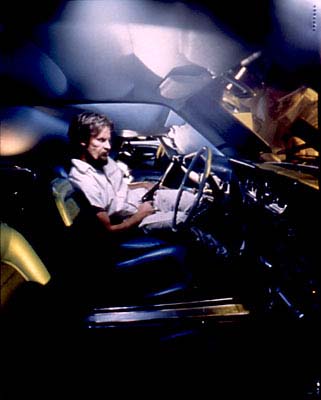
Cremaster 2 was produced fourth (out of five), meaning a notable uptick in technical precision and thematic complexity, far more than the joyous and (relatively) simple Cremaster 1. Clearly, madman Matthew Barney was maturing in his own cremastery, just as the films thematically show the progressive movement into manhood (all they really do is chronicle the descent of a scrotum, guys). But recourse to this pure biological info shall not be helpful in 2, even with whatever insights one gleaned from 1. When presented with the picture, or installation, without context or critical analysis, it is simply best to experience the effect, and let one’s further ideas of the piece develop through pre-linguistic means.

Other critics have compared this effect to Wagner or Tarkovsky. (Did I just call myself a critic?) For my part, it most reminds me of “Finnegans Wake.” Yup, I’m the sort of idiot who actually went and read that supposedly “English” “novel,” all 800 or however many pages of James Joyce’s own damn language no one’s ever really translated (such an act would be silly anyway). And really, why the hell put out something, be it a book or film, into such an incomprehensible format, unless that format itself can convey some importance. Otherwise it’s just a really complex mind game with no depth, like a crossword puzzle or Inception.

Now let’s try to figure it out!

Of course, like The Wake, some critics have made a very profitable game of providing codices to “answer” The Cycle’s cremaster plan. We’re talking 100 pounds of book you’re supposed to pore through before, during and after 7 hours spent inside someone else’s gonads. That’s all well and good, I guess, but seriously?

All is darkness, with a morphing, atonal soundtrack quite at odds with Cremaster 1 (still Jonathan Bepler). In fact, the whole mood drops the sterile for the gritty. There is much shadow, and a pervasive sense of dirt, oil and glacial water.

We open on a…thing. In extreme close up of the…thing, camera slowly pulling back. It kinda looks like a reproductive organ, and has the V-shape 1 ended with.

It is a cowboy saddle encrusted in diamonds, held upside down.

Into a dark room we find ourselves, the editing scheme never able to settle on one setting at once. A man and a woman, presumably a couple, sit before an older matron, the room increasingly resembling a bee hive.

The couple are Frank and Bessie Gilmore (Scott Ewalt and Lauren Pine), parents of Gary Gilmore, an important real life Mormon about whom this film concerns – even while it’s about the universal testicle. It’s so obvious, non-bolded text! Actual on screen dialogue says they’re names; you’re supposed to automatically recognize who they are!

The older woman leads the couple in a sort of séance, much sensual attention given to the joining of hands and bodies (and the disassembly of one very strange table). Then it’s a bunch of close-ups of honey bees and – Ah-hah! I knew it! Hive metaphors today! For as frankly sexual as this project is, at least Barney manages to avoid overt documentation of genital-AAAAAH! They’re having sex right there on the bees! Enjoy slow, melodious close-ups of sexual congress – in – and – out – in – and – out – in – and – out – Those are some good burgers, Walter. Why oh why does TRUE ART delight so in waggling penises at us (first Piranha 3D, now Cremaster 2)?

Also, did you see that the male dies following orgasm. Of course, I cannot blame you for neglecting to point out the extreme body horror as his penis swells mightily and cums bees and honey.

Then, for no reason, a pair of Canadian Mounties in an empty, dank airplane hangar bind a (hive-like) corset to an elderly man (Norman Mailer of all people).

Norman Mailer wrote the 1980 Pulitzer Prize winning novel “The Executioner’s Song.” Honestly, I’m surprised you don’t recognize this extremely obvious, not-at-all privileged knowledge about an event and book that happened before your birth. All you can do is reference Piranha 3D!

A man is on the drums, pounding out a beat to replicate the persistent humming of the bees. Over in the recording booth, another man croons his lovely heavy metal ballad, bees covering as much of his upper body as is apoideally possible.

You missed out on some fun stuff here. The drummer is Dave Lombardo, formerly of Slayer, and the vocalist is Steve Tucker of Morbid Angel. Together, they are supposed to stand for Johnny Cash (really, read the credits), who reportedly called up Gary Gilmore on the night of his execution to assu– But I’m getting ahead of myself.


Things eventually move to a grimy old gas station, out in some godforsaken wasteland (it’s Utah – hmm, the beehive state!). Barney’s camera persists endlessly in slowly considering each scene from every angle, lending Cremaster 2 its slow and hypnotic pace. An attendant is there, working his dipstick and fuel nozzle in and out and in and out and gee wasn’t it lucky you chose to make a series about sex, the easiest thing in the world to make metaphors about? Actually, there are two cars there, conjoined like, say, two embryonic gonads, by, like, a gigantic corset or a beehive deallie.

The conjoined cars represent a yearning for sexual oneness. But really, toss a stone in a modern art gallery, and you’d destroy a piece that means the same thing.


Inside the other car is a bearded freak (it’s Barney himself). His interior is all parts womb, hive and 1966 Mustang. After a very, very long while of exploring this vague, indescribable space from every position, the freak, um…he pulls some strings from the corset-hive’s walls and, er, makes two loops and joins them with a string. It makes fuckol sense, really (though it’s vaguely sexual, natch). Really, the thing most resembles a flux capacitor.

That “freak” is our hero, Gary Gilmore, Mormon son of the honey-cumming man above. Indeed his automotive repair is sexual, re: the aforementioned oneness, resembling Gilmore’s lust for Nicole Baker, who is never even indirectly mentioned in Cremaster. That attendant, by the way, is Max Jenson. If you knew your incredibly specific and unimportant history, you’d know what’s coming next.

Max comes around and – Gah! The freak – sorry, Gary Gilmore (thanks, Mr. Bold) – removes his pants to expose his flaccid little dingly-dangly. Then, thankfully, he dons new clothes, emerges from the car with a pistol, robs Max blind, and shoots him twice in the head in the gas station restroom. The camera lingers on the corpse for a bit, finally revealing a Goodyear banner in the window – Hey, that was a completely unforced callback!

What Barney doesn’t portray is Gilmore’s subsequent murder of a motel clerk in Provo the following evening. These acts of violence represent the next descent of the cremaster muscle, as manhood tries to distinguish itself…or whatever.

The Mormon Tabernacle Choir sings something that sounds like Ligeti or Penderecki – combine that with a certain slit-scan imagery from before, and I cannot help but assume references to 2001. It’s unlikely, of course, because Jeebus forbid Barney’s mighty Cremaster Cycle cite something as lowly as a classic mainstream movie (pshaw, peons!), only…It’s about the embryo. Star child quotations aren’t that outrageous, right?!

Actually, it’s a reference to this dream Barney had one time, and never told anyone about. This is the minimum level of acceptable obscurity for quotations in TRUE ART. Never forget, the Artist is God, and you diminish his wholeness by your sheer chutzpah in watching the ART.

Okay, geez, sorry!

Would you just get on with it?

Okay, fine…So I guess the Choir is, like, the judgment of Gilmore, or something. (Right, moron!) This conveys, um…Gilmore’s refusal to appeal his case in favor of execution, in order to satisfy his own misinterpretations of Mormon faith – See, Bold, I can look things up on Google too!

I hate you.


Hovering over the flooded Bonneville Salt Flats, the camera discovers a salt arena – shades of the field emblem and Bronco Stadium. A mounted cavalry arrives on horseback, as they describe the same patterns inside the arena that the chorus girls did in Cremaster 1. This ain’t that hard. (That’s what she said.) Knock it off!...So, more literal footage shows Gilmore led by prison guards to his execution. Then Gilmore appears in the salt arena in prison-striped cowboy getup, as the cavalry sets to execute him – by Brahma bull bucking! Cool! If only the death penalty was really like this! Gilmore bucks, as soon enough both he and the bull give up their life essence and collapse dead in arena’s center. They are surrounded by delicious buffalo.

This movie’s full of bull – I…Okay, I can’t B.S. this. It’s just cool imagery. Though…okay, I guess there’s some Mormon symbolism going on in there, what with the lost tribes of Israel and whatnot.


From here on out, frequent, under-edited footage of the Canadian wilderness interrupts us. It’s pretty and all, most pleasant, like Werner Herzog’s Lessons of Darkness, but it does go on.

It’s nature offering silent judgment (and comical reaction shot) to Gilmore’s deeds. And really, you now think your Herzog references are enough? Puh-lease.

We’re in a golden ballroom, hexagonally shaped, with gold, hexagonal-shaped studs all over a sculptural saddle in the center – Hah! Bees again! Bees bees bees bees bees!

Ah, but you completely missed out on the country-western couple doing the two-step. See, the two-step is clearly and unmistakably metaphorical for regression, the desire to loop backwards and escape one’s own destiny, as Gilmore himself wishes to do. This appears in cinematic terms by the overall narrative moving from the 20th to 19th century, and even in the minute editing scheme, which employs a “two-step” of its own to transition scenes.


Okay, the movie’s really starting to drift…glacial drift. Along with increasing glacier footage, we creep through a dank, under lit cabin as stuffed Canadian animals stare directly into my soul! A sign, actual text to help the idiotic viewer (me) informs that this is the 1893 Columbian Exposition. (That should’ve already been overly obvious, you uneducated dunce. What else could soul-staring bears represent?) The sign also informs us of Harry Houdini’s special metamorphosis act – okay, that’s some tangible evidence, not reliant upon knowing forgotten 1970s Utah history! Really, there’s engaging in the history-long art dialogue, and there’s obscurity for its own sake.

In honesty, let’s take it easy with the complaints. This is a substantial work of visual imagination, with a message so complex it couldn’t be told in any other way.

A 19th century woman creeps through the airplane hangar, a pug on a leash, herself corseted up to a ridiculously fatal degree (as thin as my arm!). It’s clearly 1893 now, which is why there are so many modern vehicles unidentifiable under a myriad of sheets.

Okay, I don’t get this either.

Meanwhile, Norman Mailer has emerged from his corset closet cage, employing a technique previously used by Gilmore in his car – with exceptional usage of sexual, sexual goo. Sex sex sex.

Mailer is successful in de-gooifying himself in a way Gilmore never could. Hence he finds a way beyond his present state, which Gilmore is unable to do without regressing to the past. Referring back to the scene of Gilmore’s conception, he is but a mere shadow of his father.

Mailer greets the woman, as actual explanatory dialogue occurs (because Barney realized just how otherwise impenetrable this whole entry was). The woman is Baby Fay la Foe (Anonymous – knowing these casts, it’s probably her real name), which means nothing to me. Mailer is Harry Houdini, so…Okay, I really ought to have gotten that one sooner. La Foe explains she is the queen, and Houdini is a drone (bees, baby, bees!). She asks Houdini of his metamorphosis, a mere stage act, and if he fancies to accomplish true change.

Baby Fay la Foe was a crazy spiritualist beast of a woman, who claimed to have seduced Harry Houdini (his true metamorphosis). Frank Gilmore was the fruit of this supposed union. Thus, there is every chance Harry Houdini was Gary Gilmore’s grandfather, which is the sort of knowledge which should be swimming about your head already. Also, the Columbian Exposition took place in Chicago, NOT the most inaccessible parts of Canada.


The penultimate shot is the most beautiful and poetic. We hurtle directly above Canada, mere feet from the dry, cold earth. Soon water becomes apparent, then a rushing river, as we move upstream. The river multiplies in power, until we are instead at a massive glacier, even the frozen waves showing different shapes the further we move. At least we plunge into an ice cave, and to darkness.

This glacier in Canada is what feeds the Salt Flats in Utah – as Houdini’s seed led to Gilmore. By progressing backwards from salt to ice, we follow the linear narrative path of Cremaster 2 into a more ancient oneness – a chemical metamorphosis. By the way, SEX and BEES.

Really, the act of writing about Cremaster 2 almost forces one to try considering the point behind it, which I maintain is not necessary to enjoying the pure flowing visual splendor. This is the problem with purely experiential media, and why I think Cremaster omnibuses are such a silly notion. But for this one, at least, I can offer at least some further advice, in the form of a web link where one can see the piece. And as ART’s function is to be watched (and Cremaster surely ain’t a commercial entity), I see no problem in you going out and familiarizing yourself with the strangeness.


Related posts:
• No. 2 Cremaster 1 (1996)
• No. 5 Cremaster 3 (2002)
• No. 1 Cremaster 4 (1995)
• No. 3 Cremaster 5 (1997)

LinkWithin